Judge
Public official who presides over court proceedings and issues rulings.

A judge is a public official who presides over court proceedings, either alone or as part of a judicial panel. Judges exercise significant governmental power, settling legal disputes in a final and publicly lawful manner, and are expected to conduct trials impartially and in open court. Their powers, functions, method of appointment, discipline, and training vary widely across different jurisdictions.
- Field
- Law and judiciary
- Known for
- Presiding over court proceedings, issuing rulings, and ensuring lawful and orderly trials
- Common symbols
- Gavel, robes (often black or red), elevated bench
- Common titles
- Judge, Justice (JJ), Chief Justice (CJ), Justice of Appeal (JA)
- Typical requirements
- Legal education (e.g., Juris Doctor in U.S.), significant professional experience, good moral character
Lore & Background
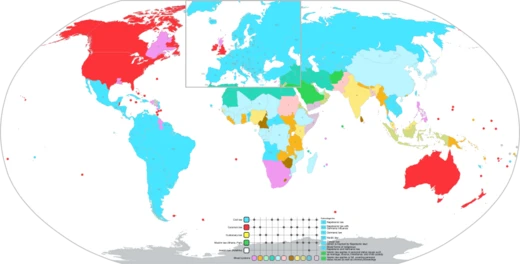
Judges may work alone in smaller cases, but in criminal, family, and other significant cases they work in a panel. In adversarial systems (common law), the judge functions as an impartial referee ensuring correct procedure, while the jury is the main factfinder. In inquisitorial systems (civil law), the judge is the main factfinder and applies the law directly, as in the French expression 'Le juge est la bouche de la loi.' Some judges also serve as examining magistrates in inquisitorial systems. Judges are often appointed through indirect election, though some jurisdictions use direct election. Professional judges are required to be legally educated; volunteer judges, such as English magistrates, are not required to have legal training and are unpaid. In the U.S., federal judges are appointed 'for good behavior,' effectively life tenure, while many states have mandatory retirement ages ranging from 70 to 90. Women are overrepresented among first instance judges in several European countries, while men are overrepresented in the UK, Ireland, and the United States. In supreme courts, women are underrepresented in the U.S.
Reader's Guide
Judges are central to the rule of law, ensuring that legal disputes are settled impartially and in accordance with legal procedures. Their role varies significantly between adversarial and inquisitorial systems, affecting how trials are conducted and who determines facts. The method of appointing judges—whether by election, appointment, or merit—shapes judicial independence and accountability. Debates persist over judicial immunity, partisan imbalance in appointments, and the influence of personal ideology on decisions. Mandatory retirement ages for judges remain a topic of discussion, particularly in the U.S. federal system, where life tenure is the norm. The diversity of judicial demographics across countries reflects broader societal patterns in legal education and professional opportunity. Overall, judges balance the exercise of substantial governmental power with the duty to reduce arbitrariness and maintain impartiality.
Did You Know?
- In some jurisdictions, judges may order police, military, or judicial officials to carry out searches, arrests, imprisonments, executions, and deportations.
- In some civil law systems, judicial panels may include lay judges who are not legally trained but are often volunteers and may be politically appointed.
- The abbreviation 'JJ' or 'JJ.' is often used for the plural form of judges or justices.
Frequently Asked Questions
Who is a Judge in the legal system?
A judge is a public official who presides over court proceedings, either solo or as part of a panel, and delivers final, publicly lawful rulings on legal disputes. They are expected to remain impartial and keep trials open to the public.
What are a Judge's core powers and responsibilities?
Judges settle disputes authoritatively, issue binding rulings, and maintain order during trials. Their exact scope of power, disciplinary rules, and training differ significantly from one jurisdiction to another.
How does a Judge's story or career typically end?
A judge's tenure usually concludes through mandatory retirement, voluntary resignation, or removal via a formal disciplinary process. In some systems, a judge serves a fixed term and simply steps down when that term expires.
Why is the role of Judge important to the legal system?
Judges exercise a significant branch of governmental power by interpreting and applying the law in a final, public manner. Without impartial adjudication, the rule of law and public trust in courts would collapse.
What symbols and titles are associated with a Judge?
The gavel, a black or red robe, and an elevated bench are the most recognizable visual markers of judicial authority. Common titles range from Judge and Justice (JJ) to Chief Justice (CJ) and Justice of Appeal (JA), depending on the court level.
More in Legal Systems & Courts 1-24
Elsewhere in the Legal Systems & Courts universe
Spotted an error? Know more?
This is a living reference — every entry is fact-audited, and reader corrections feed straight into our audit queue. Suggest an edit · See this site's audit record